Intermittent Fasting: What It Can (and Can't) Do for Weight Loss and Health
16:8, 5:2 and more. What the latest research says about intermittent fasting for weight loss and health, why some people love it, and who should avoid it.
By Clay Livingston · · 6 min read
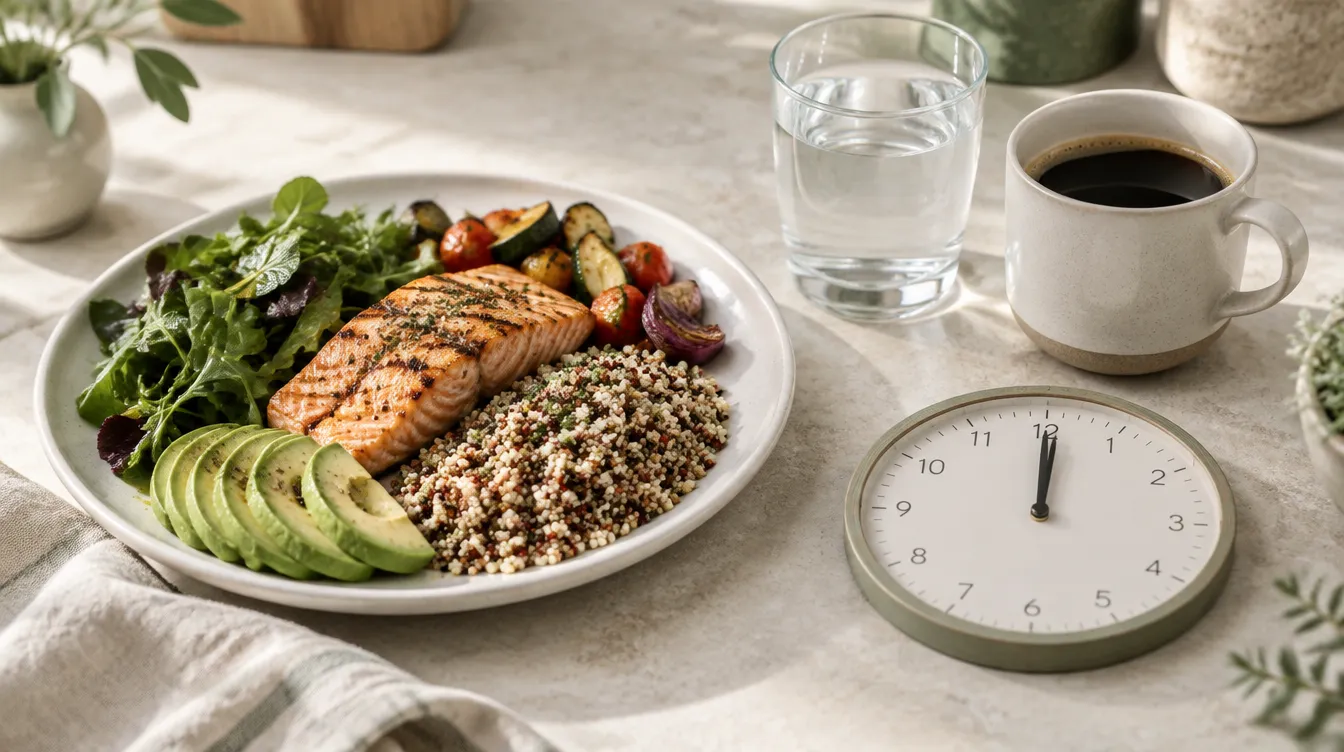
Intermittent fasting is one of the most popular ways to eat right now.
Some people swear by it. Others find it miserable.
So what does the research actually say?
This guide covers what intermittent fasting is, the most common schedules, what it can and can't do for weight loss and health, and who should avoid it.
What is intermittent fasting?
Intermittent fasting is not a diet in the usual sense. It doesn't tell you what to eat. It tells you when to eat.
You split your day, or your week, into times when you eat and times when you don't.
While you are fasting, you can still drink water, black coffee and plain tea.
The most common schedules
12:12 Fast for 12 hours, eat within 12. For example, eat between 8am and 8pm. For most people, this simply means no late-night snacking.
14:10 Fast for 14 hours, eat within 10. A gentle next step that fits most routines.
16:8 Fast for 16 hours, eat within 8. The most popular schedule. Most people skip breakfast and eat between midday and 8pm.
5:2 Eat normally five days a week. On two non-consecutive days, eat much less: around 500 calories for women and 600 for men.
There are stricter versions too, such as 20:4, one meal a day, and full 24-hour fasts. These are harder to stick to, and they aren't where anyone should start.
Does intermittent fasting help you lose weight?
Yes, it can. But probably not for the reason you might think.
In June 2025, The BMJ published a large review of 99 randomised trials, involving over 6,500 adults. It compared time-restricted eating (like 16:8), whole-day fasting (like 5:2), alternate-day fasting and ordinary daily calorie cutting.
The finding was simple. Intermittent fasting worked about as well as a standard calorie-controlled diet.
Alternate-day fasting came out slightly ahead, by around 1.3 kg on average. The researchers said this wasn't enough to be clinically meaningful, and most trials lasted a year or less.
A second study, published in Science Translational Medicine in late 2025, looked at this more closely. Researchers kept people's calories exactly the same and only changed when they ate. With calories fixed, an 8-hour eating window made no meaningful difference to blood sugar, insulin sensitivity or blood fats.
The takeaway is clear. Fasting works mainly because it helps people eat less. The clock itself isn't doing anything magical.
So why do people like it?
If the results are similar, why choose fasting at all?
Because the best diet is the one you can stick to. And for some people, fasting is easier.
Fewer decisions. A shorter eating window means fewer meals and snacks to think about.
It cuts out late-night eating. For many people, the evening is where the extra calories sneak in.
It can fit your routine. If you're rarely hungry in the morning, skipping breakfast can feel natural rather than forced.
Some people prefer restriction on fewer days. With 5:2, you only have to be strict twice a week.
In the trials, people who lost weight with fasting also saw similar improvements to things like blood pressure and cholesterol as people on standard diets. Those changes mostly come from losing weight itself, whichever method gets you there.
What the evidence doesn't support
You will see a lot of big claims online. Here is what the research does not back up.
"Fasting burns more fat than dieting." Not when calories are the same.
"It resets your metabolism" or "it detoxes your body." There's no good evidence for either.
"You can eat whatever you want in your window." You can't. If you eat more than you need in 8 hours, you won't lose weight.
"Longer is always better." Longer fasts are harder to sustain, make it harder to hit your protein target, and carry more risk.
Who should not try intermittent fasting
Intermittent fasting isn't suitable for everyone. Don't try it without medical advice if you:
- are under 18
- are pregnant, trying to conceive or breastfeeding
- have, or have had, an eating disorder or a difficult relationship with food
- have type 1 diabetes, or take insulin or other medicine to lower blood sugar
- are underweight
- have a history of fainting, low blood pressure or low blood sugar
- have kidney or liver disease, or have had weight-loss surgery
If you have any other medical condition, take regular medication or are over 65, speak to your GP or pharmacist first. Some medicines need to be taken with food.
How to try it sensibly
If fasting suits you, keep it simple.
Start small. Begin with 12:12. Move to 14:10, then 16:8 only if it feels easy.
Keep your calories and protein on track. Your eating window still needs balanced meals with enough protein, fruit and vegetables.
Drink plenty of water. Water, black coffee and plain tea are fine during a fast.
Stop eating 2 to 3 hours before bed. It makes the overnight part of the fast easier.
Train sensibly. If you work out while fasting, keep sessions light to moderate at first and drink water.
Listen to your body. If you feel dizzy, faint, shaky, confused or unwell, stop fasting and eat. If symptoms are severe or don't improve, call NHS 111, or 999 in an emergency.
The bottom line
Intermittent fasting isn't a shortcut. It's a tool.
It can help you lose weight if it helps you eat less, and for some people it does exactly that. If it makes you hungry, irritable or obsessed with the clock, a regular calorie-controlled plan will get you the same results.
The most important thing is the same as always. Eat a little less than you burn, get enough protein, move your body, and do it consistently.
Plan your meals around your day
FuelPlan Pro builds your weekly meal plan around your calorie and protein targets, then turns it into one shopping list. Whether you eat across the whole day or within a shorter window, your plan keeps your nutrition on track.
This article is for general information only and is not medical advice. Intermittent fasting is not suitable for everyone. Speak to your GP or a registered dietitian before changing your diet, especially if you have a medical condition or take regular medication. If you are struggling with food or eating, Beat, the UK's eating disorder charity, can help: beateatingdisorders.org.uk, helpline 0808 801 0677.
Sources
- Intermittent fasting strategies and their effects on body weight and other cardiometabolic risk factors: systematic review and network meta-analysis of randomised clinical trials. The BMJ, June 2025.
- Peters B et al. (2025). Time-restricted eating with identical calories (ChronoFast trial). Science Translational Medicine 17(822).
- British Heart Foundation. Intermittent fasting: is the 5:2 diet good for weight loss?
- Cleveland Clinic. Intermittent fasting: 4 different types explained.
- Beat, the UK's eating disorder charity.
Related articles
- Coming off the jab? Why the weight comes back, and how to keep what you've worked for — Fat Loss · 6 min read
Half of people stop weight-loss jabs within a year, and the weight often comes back. Here's why it happens and the food and training plan that helps you keep your results.